
 English
  Español

Decision-making in agile methodologies is based on collaboration, speed, and continuous adaptation. Instead of hierarchical and centralized decisions, collective intelligence, iterative learning, and constant value delivery are prioritized. It means shifting from vertical control to distributed intelligence.
In agile environments, decision-making is neither an isolated act nor exclusive to leaders. It is a shared, dynamic process, deeply connected to the reality of the team, the client, and the environment. Instead of seeking absolute certainty, informed action, continuous validation, and the ability to correct course are prioritized.
What characterizes an agile decision?
According to organizational agility experts, an agile decision is defined by three key attributes:
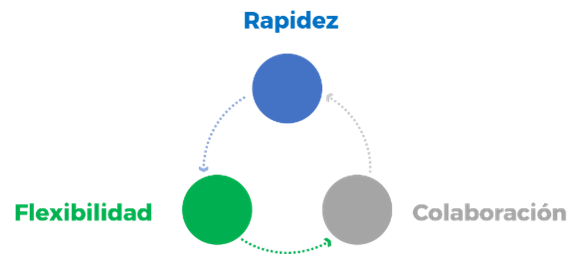
- Speed: Decisions are made at the right moment, without waiting for perfect information.
- Flexibility: They adapt as conditions change or new feedback emerges.
- Collaboration: They involve those closest to the problem, not only those with formal authority.
This approach contrasts with traditional models where decisions are made at the top of the hierarchy and executed in a cascade. In VUCA or BANI contexts, such rigidity can be fatal.
Agile practices that support effective decision-making
| Practice | How it contributes to decision-making |
|---|---|
| Daily stand-ups | Enable quick adjustments and daily tactical decisions. |
| Retrospectives | Generate collective decisions about how to improve processes. |
| Backlog grooming | Facilitates decisions about priorities and delivered value. |
| Sprint reviews | Allow teams to decide with the client which direction to take next. |
These practices not only produce faster decisions but also ones more aligned with purpose and the real needs of the end user.
The leader’s role in agile decision-making
Instead of being the sole decision-maker, the agile leader acts as:
- Facilitator: Creates the conditions for the team to decide autonomously.
- Guardian of purpose: Ensures that decisions align with the overall vision.
- Unblocker: Intervenes only when obstacles arise that the team cannot solve alone.
This role shift requires humility, active listening, and trust in collective intelligence.
Deciding is learning
In agility, deciding is not about closing possibilities but opening paths. Each decision is a hypothesis validated through action. Therefore, the ability to learn quickly is valued more than being right from the start.
Decision-making in agile methodologies is not just a technique—it’s a philosophy. It’s about trusting that knowledge is distributed, that mistakes are part of the journey, and that value is built through collaboration. When an organization learns to decide this way, it doesn’t just become more agile—it becomes more human.
