
 English
  Español

Empowering teams is not simply about delegating tasks. It’s about building the conditions for people to feel capable, confident, and committed to what they do. It’s a shift from a logic of obedience to a culture of ownership—and that requires a conscious, ethical, and emotional process.
What does it mean to empower?
To empower means to enable. It’s about recognizing each person’s potential and providing them with the resources, context, and trust to unleash it. An empowered team doesn’t wait for instructions—it proposes, decides, learns, and takes responsibility.
Stages of the empowerment process
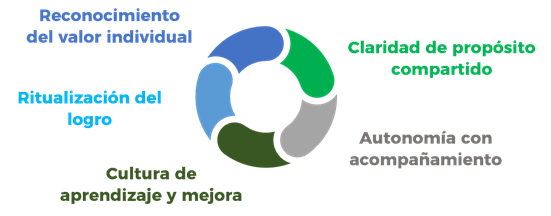
1. Recognizing individual value
Before asking for commitment, identity must be validated. Each member should feel seen, heard, and valued.
- Active listening to stories, talents, and aspirations.
- Symbolic recognition of achievements and contributions.
- Spaces for expressing emotions and needs.
2. Clarity of shared purpose
Empowerment is not anarchic—it requires direction. The team must understand the “why” behind their work.
- Co-creation of meaningful objectives.
- Narratives that connect work to impact.
- Collective visualization of success.
3. Autonomy with support
Granting autonomy doesn’t mean abandonment—it’s trusting without letting go. The team needs freedom to decide, but also support to learn.
- Progressive delegation of decisions.
- Facilitation instead of supervision.
- Continuous feedback, not judgment.
4. Culture of learning and improvement
Mistakes should not be punished but leveraged. An empowered team learns from itself.
- Emotional and technical retrospectives.
- Celebration of learnings, not just results.
- Cross-training among peers.
5. Ritualizing achievement
Empowering also means celebrating. Recognizing progress strengthens collective identity.
- Symbolic closure rituals.
- Emotional and narrative recognition.
- Visibility of internal and external impact.
Leadership as a facilitator of empowerment
The leader’s role in this process is not to control but to care. Not to direct but to enable. A leader who empowers:
- Trusts before the team proves itself.
- Listens even when there are no clear answers.
- Celebrates the process, not just the outcome.
When teams feel empowered, they don’t just work better—they transform. They become learning communities, networks of purpose, spaces where work ceases to be an obligation and becomes expression. Empowerment, at its core, is an act of faith in humanity.
