 English
  Español

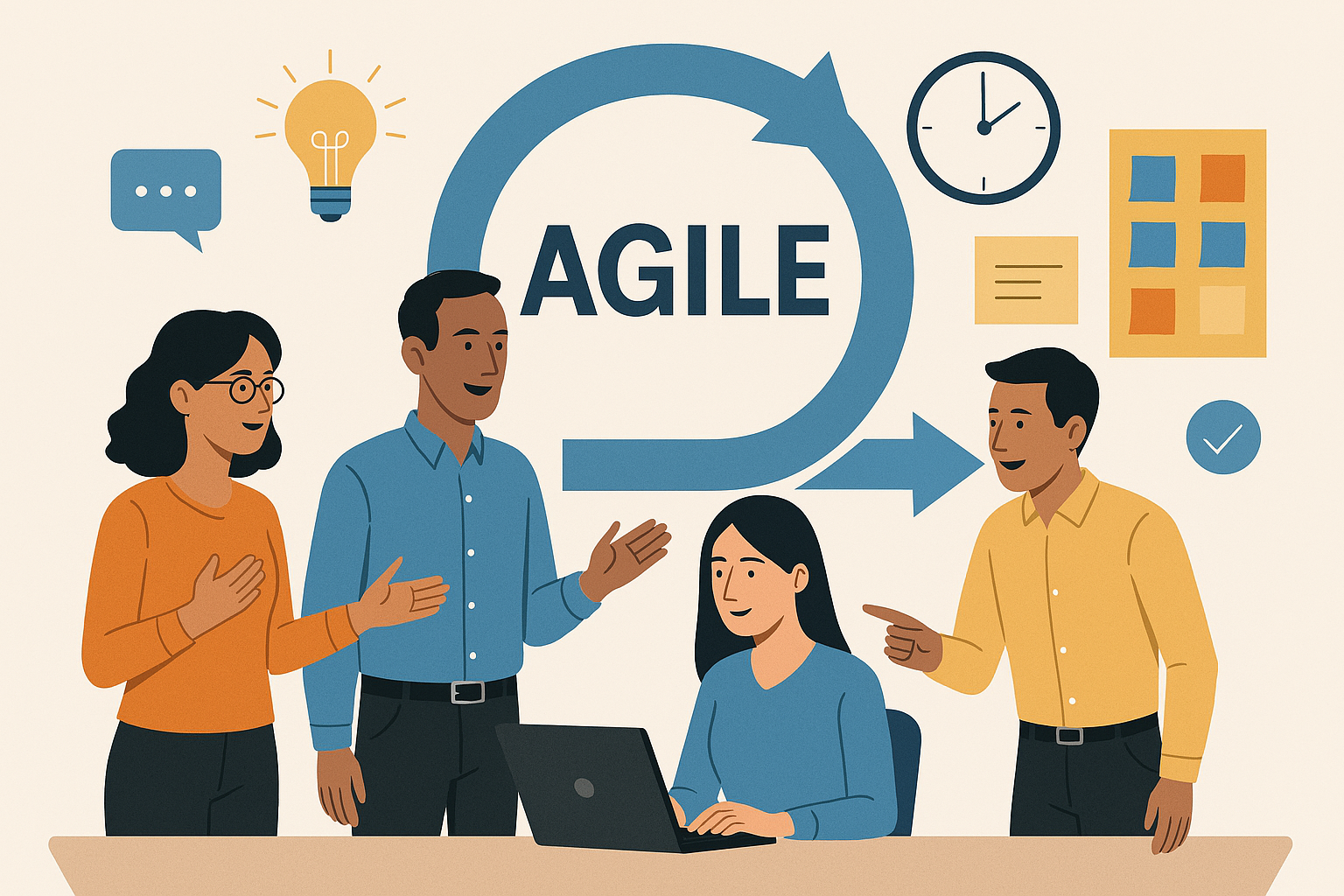
In a world where the pace of change surpasses traditional planning capabilities, agile methodologies emerge not just as frameworks, but as philosophies of human interaction. Beyond sprints, boards, and retrospectives, what truly defines agility is how people relate, listen, and co-create.
In a world where the pace of change surpasses traditional planning capabilities, agile methodologies emerge not just as frameworks, but as philosophies of human interaction. Beyond sprints, boards, and retrospectives, what truly defines agility is how people relate, listen, and co-create.
- Radical transparency: Tasks, progress, and blockers are visible to everyone. There are no hidden hierarchies or parallel agendas.
- Continuous feedback: Feedback isn’t reserved for annual reviews; it happens in real-time, with respect and a focus on improvement.
- Learning from mistakes: Failure isn’t punished—it’s analyzed. Agile culture turns mistakes into fuel for collective growth.
Interaction in agile environments is frequent, brief, and purposeful. Every meeting, message, and gesture has a clear intention:
- Daily stand-ups: Short meetings that align the team, promote active listening, and help adjust direction.
- User stories: Language is adapted to the customer, not the technical team. Empathy and clarity are prioritized.
- Open channels: Tech tools are living spaces for conversation.
Instead of rigid structures, agile teams function as talent networks with situational leadership:
- Scrum Masters as facilitators: They don’t command—they enable. Their role is to support the process and team wellbeing.
- Product Owners as bridges: They translate customer needs into team language, prioritizing value.
- Multidisciplinary teams: Diverse backgrounds enrich the solution. Everyone contributes from their specialty while collaborating through a shared vision.
Agility doesn’t aim for perfection on the first try, but for continuous improvement through short cycles:
- Sprints as co-creation rituals: Each cycle is a chance to test, adjust, and learn together.
- Retrospectives as emotional spaces: Technical topics are discussed, yes—but also the human side: how we feel, what we need, what we celebrate.
- Continuous delivery as commitment: We don’t promise for the distant future—we deliver value today. That strengthens both client and team relationships.
True agility happens when people feel part of something bigger:
- Purpose as a compass: Every task connects to a bigger vision. That motivates, aligns, and gives meaning.
- Empathy as a strategic tool: We listen to the client, the colleague, the context. Agility is not just about efficiency—it’s about sensitivity.
- Celebrating achievements: Progress is recognized, effort is appreciated, and the journey is honored.
In short, agile methodologies are not just work frameworks; they are ecosystems of human interaction. In them, collaboration isn’t just working together—it’s building together, learning together, and evolving together. Properly understood, agility is a way of nurturing relationships while transforming outcomes.